Fabrics

Three categories, worked properly

We supply yarn-dyed woven, TR and poly-viscose blends, and knit. Each category below carries the composition, weight, width and end uses we actually work in — with minimums as usual values confirmed per order, not thresholds printed in stone.

The categories

What each category is for

Start from the garment. The end use decides the construction, and the construction decides the price, the minimum and the lead time.

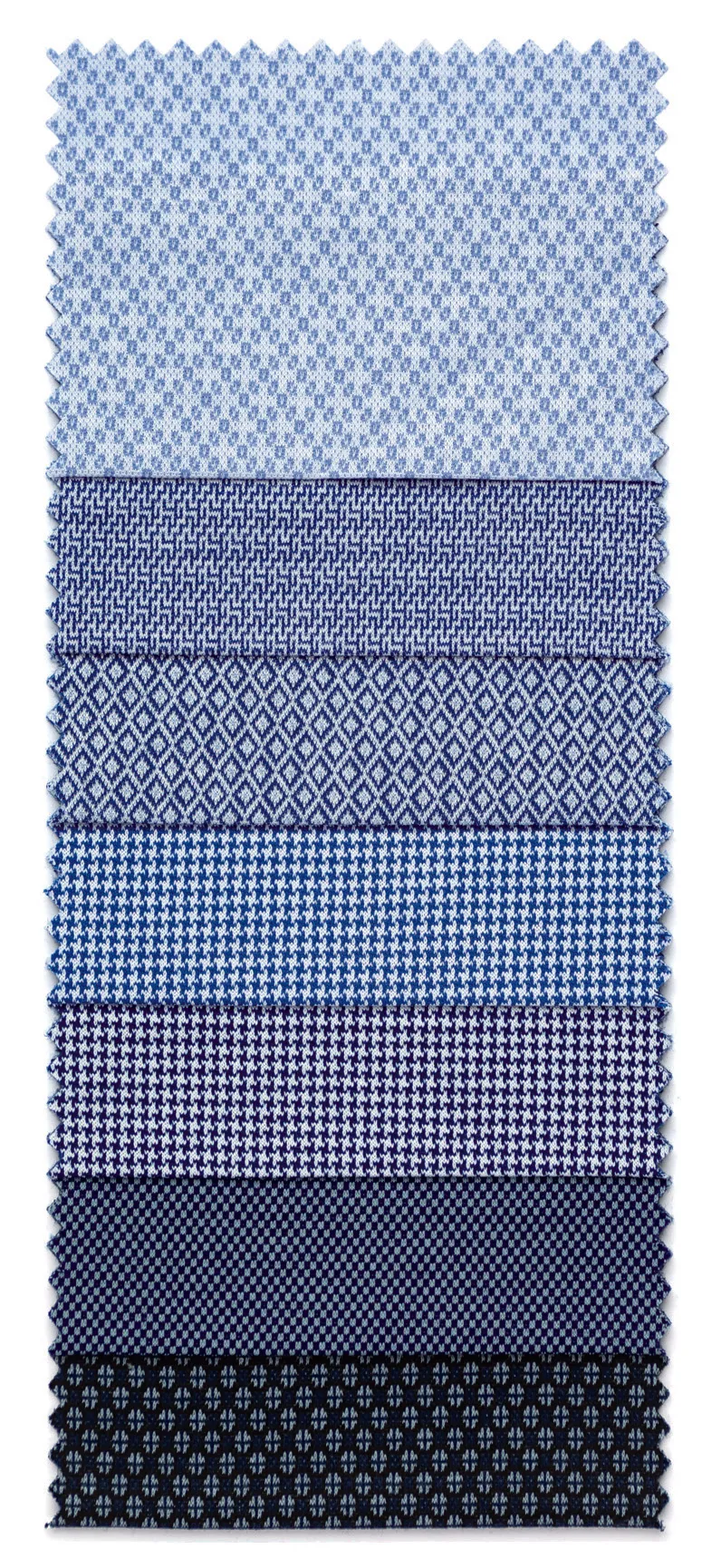
Blue patterned woven fabric swatches
Woven

Yarn-dyed woven

Pattern built from dyed yarn rather than printed on the surface, so checks and stripes hold through washing and abrasion.

  • Typical composition: cotton, cotton-linen and cotton-rich blends; other fibres on request.
  • Typical weight: 110–200 g/m².
  • Typical width: 140 cm and 150 cm cuttable.
  • Common end uses: shirting, light bottoms, dresses, workwear and uniform cloth.
  • Usual minimum: 2,000–3,000 m per colour and per order, subject to confirmation.
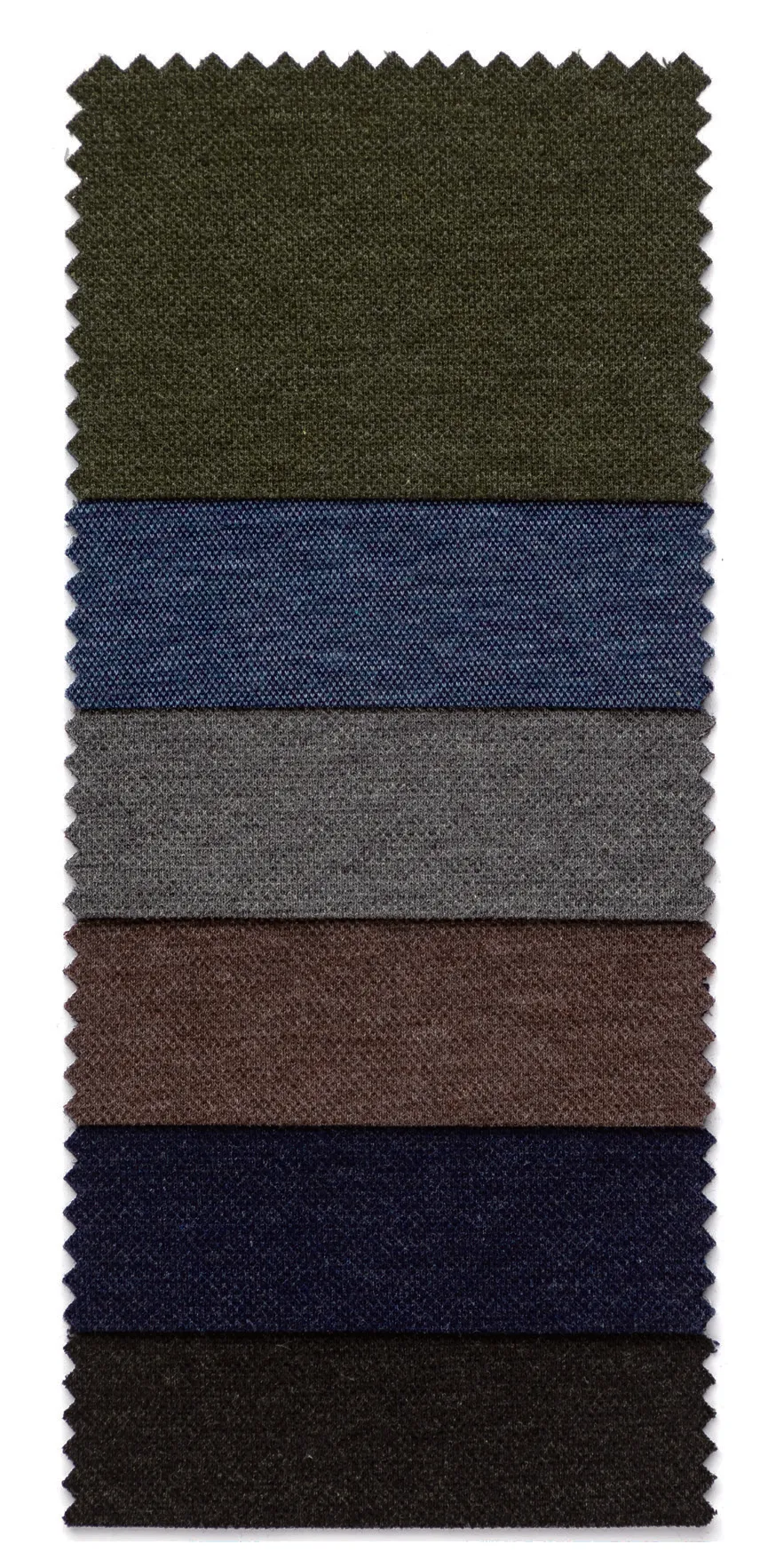
Dark woven fabric swatches
Woven

TR and poly-viscose blends

Polyester and viscose blends finished for drape, recovery and easy care in suiting and trouser programmes.

  • Typical composition: T/R blends, commonly 65/35 and 70/30, with stretch versions available.
  • Typical weight: 180–300 g/m².
  • Typical width: 150 cm cuttable.
  • Common end uses: suiting, trousers, skirts, jackets and uniform programmes.
  • Usual minimum: 2,000 m per colour and per order, subject to confirmation.
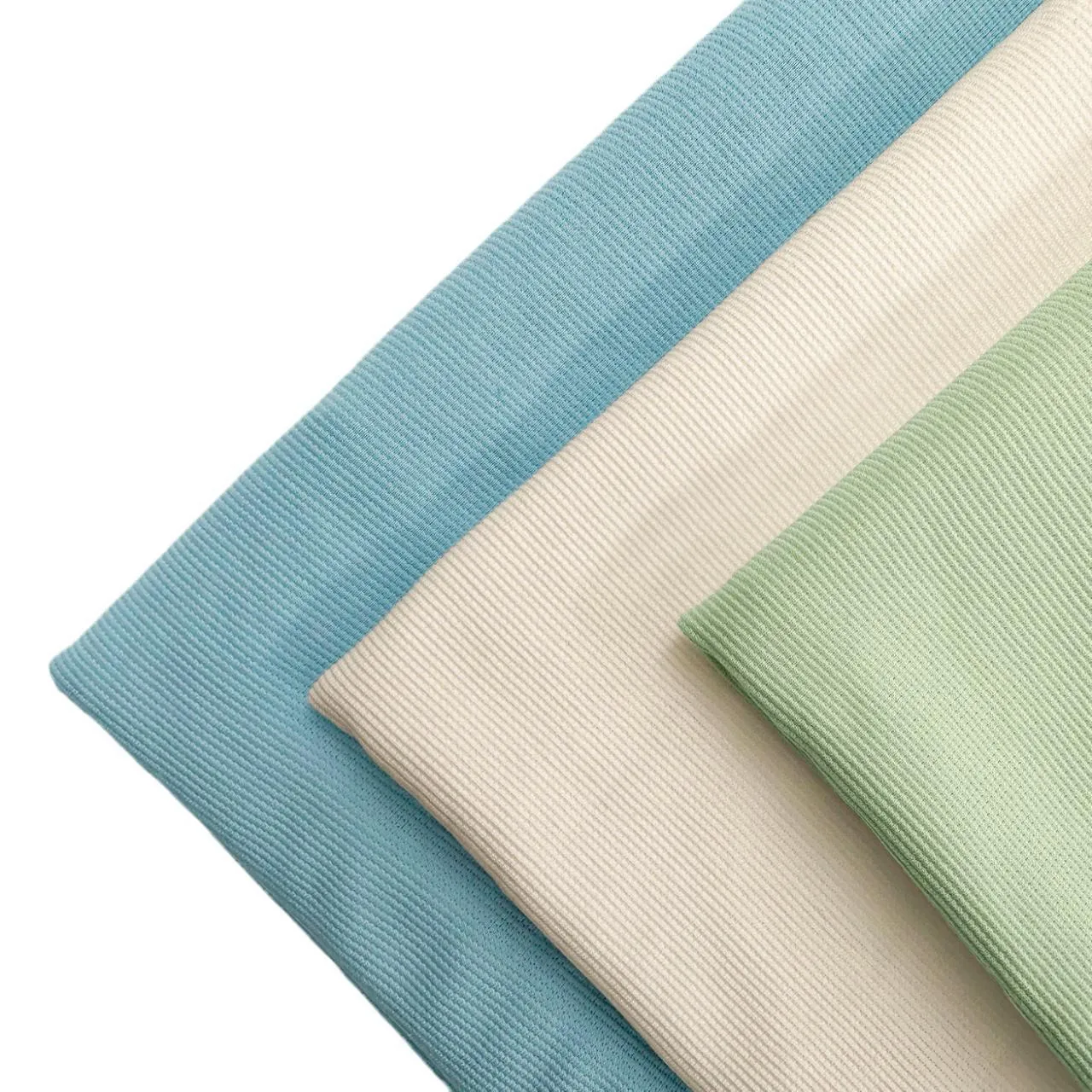
Folded knit fabric in blue, ivory and sage
Knitted

Knit

Jersey, pique and fleece, in solid or yarn-dyed constructions, quoted by weight and finished to the garment.

  • Typical composition: cotton, cotton-polyester and poly-rich blends; viscose and modal blends on request.
  • Typical weight: 140–320 g/m², depending on whether the cloth is jersey, pique or fleece.
  • Typical width: 160 cm and 180 cm cuttable.
  • Common end uses: knit tees, polos, hoodies, sleepwear and light outerwear.
  • Usual minimum: 500 kg per colour, 1,000 kg per order, subject to confirmation.

Weights, widths and minimums above are the ranges we usually work in and are confirmed per order.

Specifications

Category specifications at a glance

Indicative ranges for the three categories. The specification that applies to your order is the one confirmed per order and written onto the order documents.

Typical fabric specifications — confirmed per order
CategoryTypical compositionWeightCuttable widthUsual minimum
Yarn-dyed wovenCotton, cotton-linen, cotton-rich blends110–200 g/m²140 / 150 cm2,000–3,000 m / colour
TR and blendsPoly-viscose 65/35, 70/30, stretch blends180–300 g/m²150 cm2,000 m / colour
KnitCotton, cotton-polyester, poly-rich, viscose blends140–320 g/m²160 / 180 cm500 kg / colour

Minimums, weights and widths are subject to confirmation. Special yarns and unusual colour requirements are agreed case by case.

Catalogue

How articles are catalogued

Every cloth we can quote consistently is held as an article: one identifier, one construction, one recorded specification. That is what makes a repeat order repeat.

Article number
The identifier for one construction. It is what you quote, sample, order and reorder by, so the same cloth is not discussed under two different names.
Composition
Fibre content, stated as percentages. This is the first thing a mill or dyehouse reads from a specification.
Weight
Grams per square metre for woven, grams per square metre or per linear metre for knit — always with the tolerance range agreed at confirmation.
Width
The cuttable width, in centimetres, after finishing. Useful width matters more than greige width, because it decides your marker and consumption.
Construction and finish
Yarn count, density, weave or knit structure, and the finish applied — non-iron, easy care, water-repellent and similar.
End use and market
What the cloth is for and where it ships, which is what decides the tests, packing and documents the order needs.

If you already work from article numbers of your own, send them. We will map your reference onto the construction behind it, so both sides are looking at the same cloth.

Next step

Custom development or spot, depending on where you are

Both routes are open. Which one you want depends on whether you are testing a quality or committing to a season.

Custom development

The main channel: cloth produced to your specification, with the composition, colour and finish agreed before bulk. Usual minimums apply, and the whole brief is negotiable before the order is placed.

Choose this when the specification matters and the quantity supports it. Departures from the brief are discussed with you rather than discovered in the finished roll.

Spot and small lots

A supplementary channel for trial quantities: from 1 m per colour, subject to stock, priced above custom production because the goods are bought and held rather than made to order.

Choose this when you need a small quantity quickly, or when you want to see a quality before deciding whether it belongs in the programme at all.

The full article library, with an individual page for each article and its recorded specification, is being prepared. Until it is published, the fastest route to a specific cloth is the free A4 sample: send the end garment and any reference you have, and the swatches that match come back to you.
Next step

Ask for the swatches that fit your garment

Send the composition, weight and colour you are working to — or just the end garment and a reference sample. Swatches are free; courier is on your account.

Minimums, weights, widths and lead times are confirmed per order.